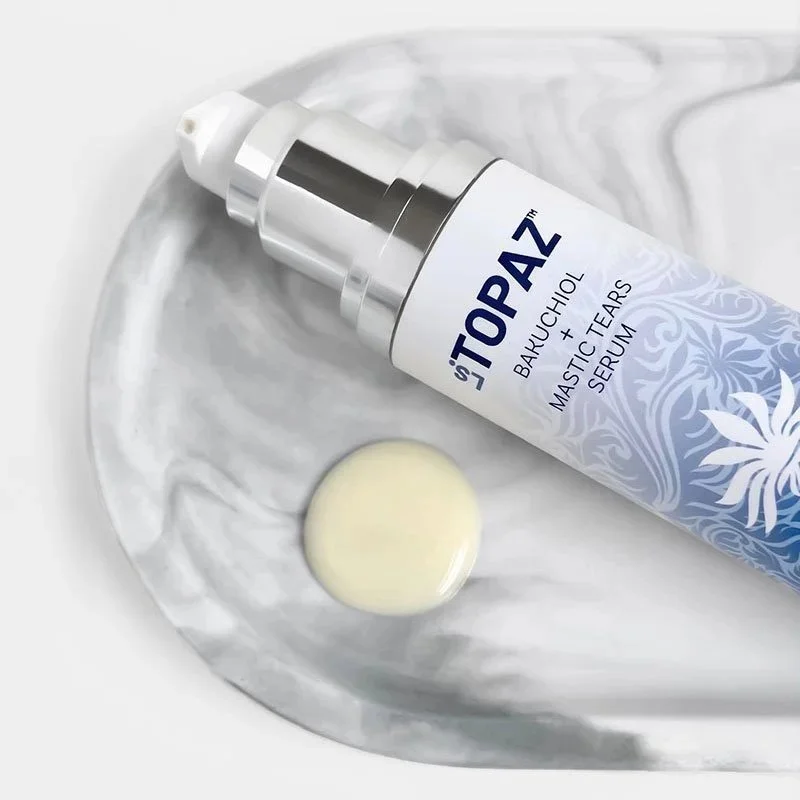
If you've spent any time reading about skincare, you've seen the phrase: "retinol replacement." It sounds simple. Swap one ingredient for another and get the same result with none of the fuss. The truth is a little more interesting, and it's worth understanding before you reach for the next bottle.
First, what is retinol?
Retinol is a form of vitamin A and one of the most talked-about anti-aging ingredients in skincare. It earned that reputation because it works on how skin renews itself, helping skin look smoother and more even over time.
It also earned a second reputation, and people rarely mention it up front.
Why so many people struggle with retinol
Retinol is well known for being hard on skin. Common complaints include:
Redness and irritation
Dryness, tightness and flaking or peeling
A stinging or burning feeling, especially in the first weeks
Skin that is more sensitive to the sun
Because of that, retinol is usually introduced slowly and used a few nights a week, and it is generally paired with a daily sunscreen. It is also commonly advised that people avoid vitamin A products like retinol during pregnancy, so if you're pregnant, nursing or planning to be, ask your doctor before using any retinol product.
None of this means retinol is "bad" for everyone. It does mean that many people give up on it, or keep using it while their skin pays the price. That's exactly the gap a retinol alternative is meant to fill.
What "retinol replacement" does and doesn't mean
Here's where the misunderstandings start. A plant-based alternative is not retinol with a new label. It is a different ingredient, with a different source and a different structure, that's used for a similar purpose: helping skin look smoother, firmer and more even.
So when we say alternative, we mean exactly that. Bakuchiol is a plant-based alternative to retinol. It's a gentle botanical answer to the classic anti-aging ingredient, with no retinol and better stability in light. We don't say it is the same as retinol, and you shouldn't expect it to behave like it. What we can say is why we chose it.
Why we chose bakuchiol
Bakuchiol comes from the seeds of the Psoralea corylifolia plant. Suppliers describe it as a retinol alternative known for supporting cell turnover and skin texture, and describe its effect on skin as similar to retinol's, even though it is a different compound. Its structure is actually closer to resveratrol, the antioxidant found in grapes.
A few reasons it earned its place in our serum:
It's a plant-based alternative. It contains no retinol.
It's more stable in light. Compared with retinol, bakuchiol holds up better, which matters for a product you'll use every day.
It's an antioxidant. It helps protect skin from everyday stress while helping it look smoother, and to reduce the look of wrinkles.
It supports balance. It's known for helping skin look less oily and feel more comfortable.
“Bakuchiol is only half of the story.”
Why we pair it with mastic tears
Bakuchiol is only half of the story. The other half is mastic tears, the aromatic resin that comes from the mastic tree. It grows on the Greek island of Chios, and mastic from southern Chios is protected by a designation of origin. The resin forms when the bark is scratched, which is where the "tears" (drops of sap) come from.
The mastic ingredient we use is made to serve as a plant-based retinol alternative too, and it is a COSMOS- and NATRUE-approved raw material, which are two recognized natural-cosmetics standards. According to its maker, it works with the skin's own retinoic acid, the form of vitamin A skin actually uses, rather than adding retinol. Its maker's testing also describes:
Improved skin elasticity and density
Visibly refined pores
A visible increase in skin brightness
Put those two plants together and you get two different routes to the same goal: smoother, firmer, more even-looking skin without any retinol.
The rest of the formula
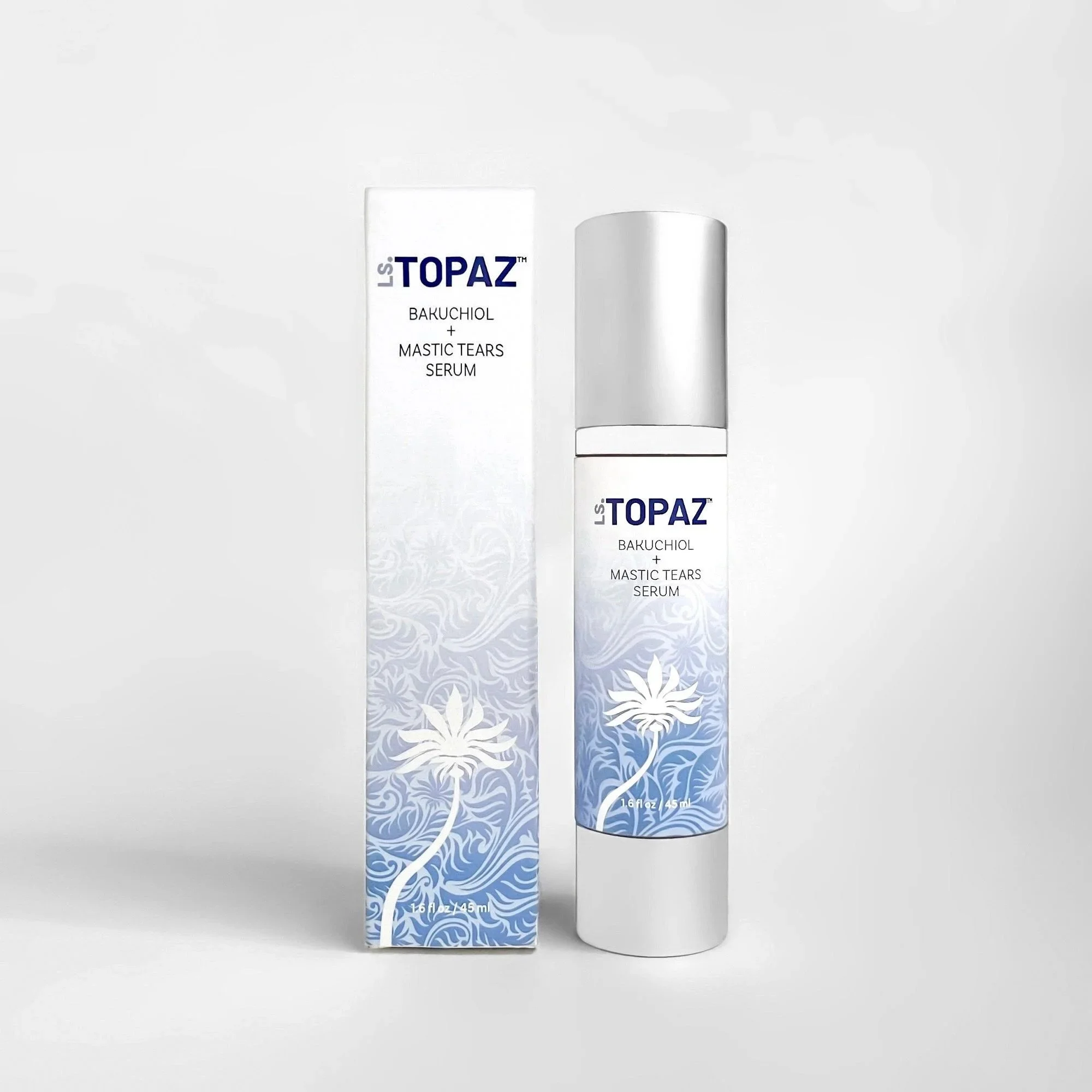
A great serum is more than two headliners. Our Bakuchiol + Mastic Tears Serum is formulated to be effective, with:
Kakadu plum, a plant known for having one of the highest natural concentrations of vitamin C in the world
Ferulic acid, a powerful antioxidant
Hyaluronic acid for plumping hydration
Rose hydrosol and watermelon glycerin for soothing moisture
Olive squalane and babassu oil for a soft, supple finish
Caffeine to help tired-looking skin look more awake
How to use it
Use it in the evening, after cleansing and misting, and while your skin is still slightly damp. Smooth 1–2 pumps over your face, neck and décolleté, then follow with a few drops of LS.Topaz Botanical Facial Oil to seal everything in.
As with any new product, try a small area first, and stop use if you notice a reaction. If you're pregnant, nursing, or under a doctor's care for your skin, check with your doctor before adding anything new.
Frequently asked questions
Is bakuchiol the same as retinol? No. Bakuchiol is a different, plant-derived ingredient. Suppliers describe its effect as similar to retinol's, but it is not retinol and it contains no vitamin A.
Does the serum contain retinol? No. There is no retinol in the LS.Topaz Bakuchiol + Mastic Tears Serum.
Why is retinol so often irritating? Retinol is a strong ingredient. Redness, dryness, peeling and sun sensitivity are widely reported, which is why it is usually started slowly and paired with sunscreen.
What are mastic tears? Mastic tears are a resin from the mastic tree, which grows on the Greek island of Chios.
Can I use it with other LS.Topaz products? Yes. We like it under our Botanical Facial Oil in the evening, after the Facial Mist.
Do I still need sunscreen? Yes. Daily sunscreen is a good habit with any skincare routine.
Shop the serum
Elevate routine to ritual.
Available online at: https://www.lstopaz.com and at Lilly Sage Apothecary, 1097 Alpharetta St, Roswell, GA 30075